
Tribute to Professor Samuel G. K. Adiku (1959–2026)
On behalf of the Agricultural Model Intercomparison and Improvement Project (AgMIP)
November 5, 2026
The AgMIP community learned with deep sadness of the passing of Professor Samuel G. K. Adiku on Friday, October 16, 2026. He was a soil physicist and a systems modeler. Across the West African research community, he was among the pioneering scientists who brought crop modeling to bear on smallholder farming systems in Africa. AgMIP has lost a colleague and a friend.
Prof. Adiku spent his academic career in the Department of Soil Science at the University of Ghana, Legon, where he rose to the rank of Full Professor. His work ranged across soil physics, plant growth and water uptake, rangeland systems, and agricultural systems simulation. He never treated the soil as a static input. He wanted to know how water moved through it, how roots drew it up, and how all of that became yield, or failed to, under a changing climate. That curiosity carried him to Germany through the Alexander von Humboldt Foundation. Working alongside ecosystem scientists there, he led the development of PIXGRO, a model simulating the carbon dioxide exchange and growth of spring barley, published in Ecological Modelling in 2006. He also contributed to work relating satellite vegetation indices to leaf area in forests. Prior to this, his PhD thesis, which focused on the maize-cowpea intercrop system in Ghana, contributed to the development of the intercrop module in APSIM, with several related papers published in 1997.
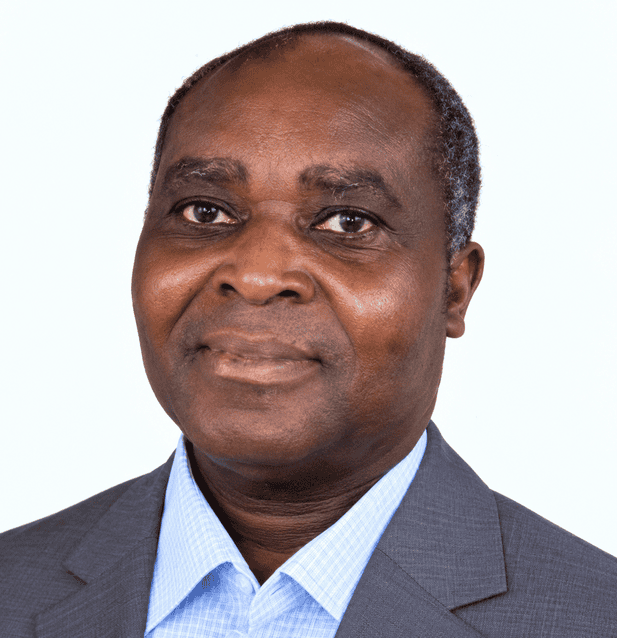
Source: The African-German Network of
Excellence in Science (AGNES)
For AgMIP, his contribution was foundational. He was among the pioneering scientists who gathered for the inaugural AgMIP Global Meeting, helping to shape the vision and collaborative spirit that would grow into a global research network. During the first phase of the DFID-funded AgMIP Sub-Saharan Africa Regional Integrated Assessment Study, he served as Principal Investigator for West Africa, leading the Climate Change Impacts on West African Agriculture (CIWARA) team from March 2012. In this role, he brought together climate scientists, crop modellers, and economists from Ghana, Senegal, Mali, Niger, and Burkina Faso, drawn from universities, ICRISAT, AGRHYMET, CIRAD, and national research institutes. This was no small task. These researchers represented diverse disciplines, languages, and institutional cultures, yet he succeeded in uniting them around a common framework for integrated assessment. Their early findings sounded a clear warning for the region. Using AgMIP methods in the Nioro Basin of Senegal, the team projected that, without adaptation, climate change would significantly reduce the productivity of millet, maize, and other staples by mid century. He brought these findings to the broader scientific community, presenting them at the 2013 American Society of Agronomy Annual Meeting in Tampa and co-authoring, with Cynthia Rosenzweig, James Jones, and colleagues, a chapter on AgMIP’s integrated regional assessment projects in the Handbook of Climate Change and Agroecosystems.
Perhaps his most enduring legacy was the people he trained. He mentored a generation of West African crop modellers, many of whom continue to play active roles in AgMIP and related research initiatives today. He also spoke candidly about the reforms needed in Ghanaian agriculture. He advocated for crop-specific land zoning and the routine use of soil testing, noting that in some countries, farmers must present a soil test report before they can apply for agricultural credit. He would often add, “You cannot effectively manage what you do not measure.” He emphasised that African agricultural systems face numerous constraints that need to be adequately captured in process-based models to enhance the representation of African cropping systems.
AgMIP extends its deepest condolences to his family, to his colleagues at the University of Ghana, and to the many students and collaborators across Africa and beyond who learned from him.
The models he helped build will endure. The people he mentored will continue to ask the questions that defined his scientific curiosity. We will miss him dearly.
May he rest in peace.