Turning Research into Solutions
The Stone Barns Center-Columbia Climate School Partnership
By Caroline Fox and Kevin Karl
7 May, 2026
Background
In 2024, a research partnership between the Stone Barns Center for Food and Agriculture and the Columbia Climate School was launched to catalyze action on food, agriculture, and climate in the New York City foodshed. Columbia’s involvement is led through the Agricultural Model Intercomparison and Improvement Project (AgMIP), and several University Centers and Departments, including the Lamont Doherty Earth Observatory, the Department of Ecology, Evolution and Environmental Biology, the School of International and Public Affairs, and Teachers College. Additional research partners include New York University and Michigan State University.
New York City’s regional foodshed operates as a network of pathways connecting local food to where it is consumed in New York City. Yet this system is increasingly destabilized by overlapping pressures including climate change, development, and food insecurity. In the Bronx, 22.6% of residents were considered food insecure in 2023. In 2024, the NY Health Association reported that hunger in NY State was at the highest level in 5 years. Meanwhile, there are fewer opportunities to grow local food given development pressure in peri-urban areas. In Westchester County, the number of farms fell by 12% between 2012 and 2017, and an additional 6% from 2017 to 2022, reflecting how competition from residential and commercial development can lead to agroecosystem fragmentation and undermine agricultural viability.
New York State is also off pace to meet its climate targets, despite agriculture and land use holding significant potential for emissions reductions. New York’s Climate Act requires the state to cut greenhouse gas emissions 40% from 1990 levels by 2030, while the latest emissions report showed a 15% reduction in emissions from 1990, leaving only four years to cut another 25%. These converging pressures create an opportunity to transform how the NYC foodshed produces, distributes, and consumes food in ways that benefit public health, local economies, and the environment.
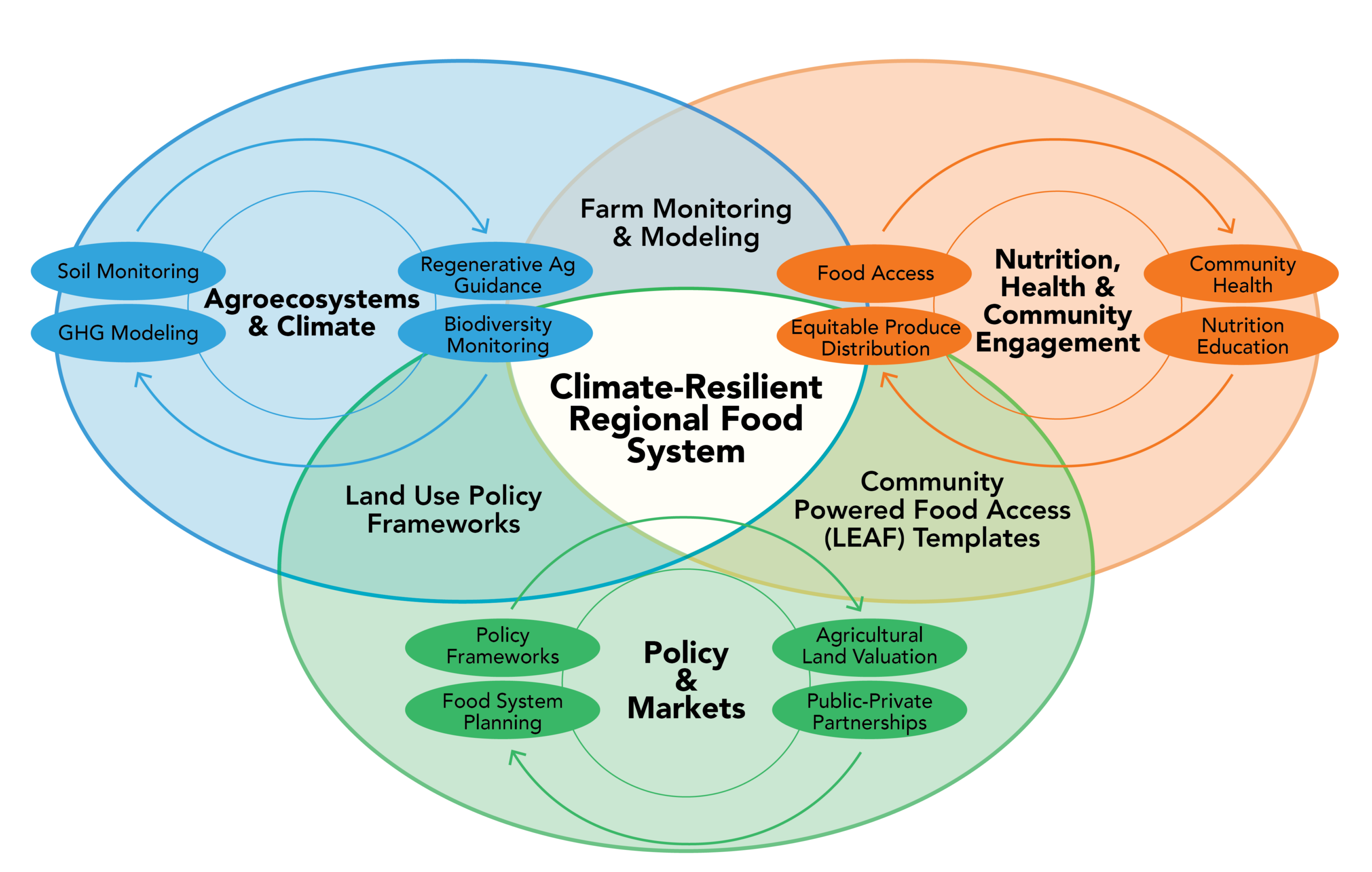
Figure 1. The Stone Barns Center-Columbia Climate School research partnership integrates agroecosystem research,
nutrition and public health, and policy for a climate-resilient regional food system.
Three Pillars in Action
The Stone Barns-Columbia Climate School research partnership has a mission to “leverage [their] networks to transform regional and global food systems in order to support climate-resilient agroecosystems and healthy, just communities.” Made up of three Research Pillars or Teams – Agroecosystems & Climate; Nutrition, Health & Community Engagement; and Policy & Markets – the partnership aims to connect research, community engagement, and policy to deliver practical, real-world solutions (Figure 1). The three pillars are tackling food systems problems simultaneously, at the same time as they integrate their work into new land management models, farming toolkits, and program templates. Combined, the project aims to significantly improve food systems for communities across the Northeast.
Agroecosystems & Climate
The research partnership between Stone Barns and the Columbia Climate School begins on the farm. The Agroecosystems & Climate Pillar’s mission is to inform science-based actions to improve regenerative agricultural management practices for Stone Barns and beyond. Key agroecosystem outcomes include improved soil health, enhanced ecosystem productivity, and greenhouse gas (GHG) mitigation, among others.
In 2025, soil samples from 120 different locations were collected, tested, and analyzed to evaluate the factors that influence overall soil health (Figure 2). The team looked at the relationship between rotational grazing, CO2 flux, and soil moisture. The findings indicate that more intensive grazing periods – or allowing animals to access a small section of the pasture for shorter grazing intervals – are associated with higher soil moisture and carbon cycling (Figure 3). These insights can help refine future land management decisions and could open the door for agricultural carbon market opportunities.
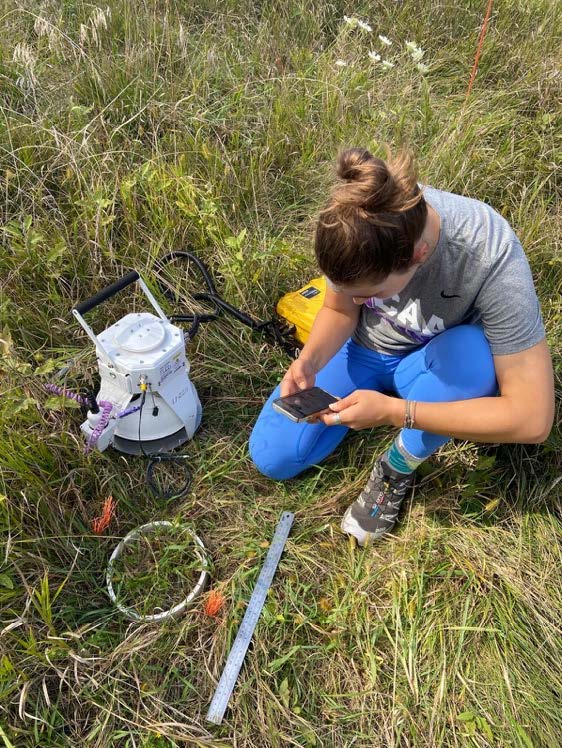
Figure 2. Itxaso Ezcurra, a member of the Agroecosystems & Climate Team, working with a LI-870 Gas Analyzer in the field at Stone Barns Center during the summer of 2025. Photo credit: Stone Barns Center
The National Farm Model Intercomparison Project (Farm-MIP), a USDA-funded five-year project, emerged in 2025 as an opportunity to leverage the partnership’s data to improve agroecosystem modeling. Throughout the U.S., there are still significant data gaps related to soil carbon cycling and storage. The long-term soil data made available by Stone Barns – and processed by Columbia researchers – could help develop models that improve soil carbon and nitrogen simulation across the Northeast. Their goal is to provide farmers with a robust evidence base for management practices that improve soil health and reduce greenhouse gas emissions.
In addition to soil health data, Stone Barns possesses longitudinal observations on water quality and elements of biodiversity, such as soil microbes, bird populations, and plant species distribution. In 2026, the Agroecosystems & Climate Team is working to develop an integrated model assessing the relationships between management practices and agroecosystem outcomes, resulting in an adaptable and scalable monitoring system for farmers across the country.
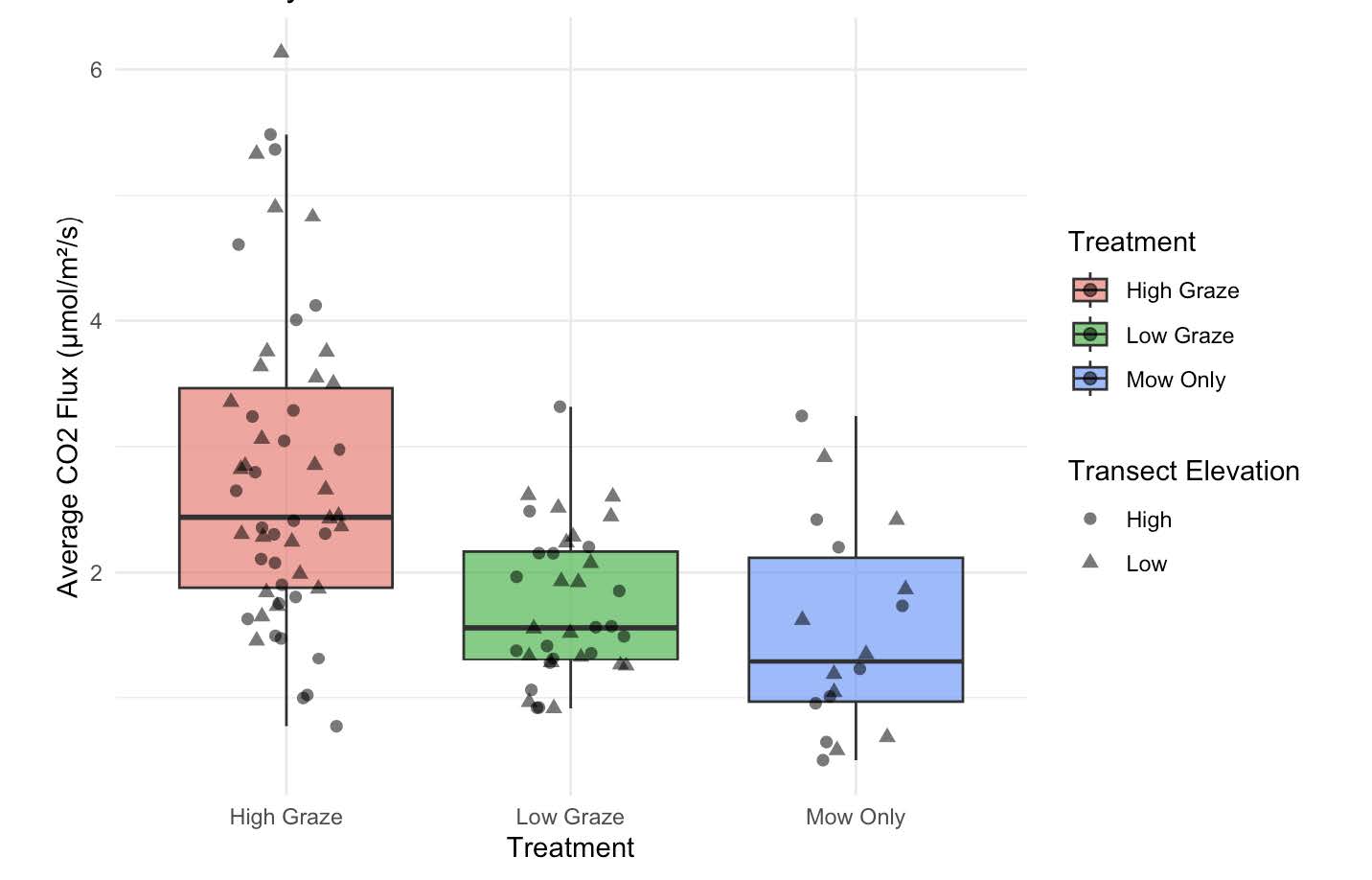
Figure 3. Soil CO2 fluxes were influenced by grazing treatment at
Stone Barns Research Center. High variability and greater average carbon fluxes
were observed in high-intensity grazing plots compared to low-intensity grazing
and control (mowed only) plots. This indicates that more intensive grazing
increases soil respiration and carbon cycling.
Nutrition, Health & Community Engagement
The research from the Agroecosystems & Climate Pillar supports sustainable crop production and land management. The next step is to consider the distribution and education of nutritious food. The Nutrition, Health & Community Engagement Pillar advances equitable food access, nutrition education, and community-based research translating farm-based knowledge into urban and peri-urban community settings. The research partnership between Stone Barns and Columbia Climate School is dedicated to creating just, equitable food systems.
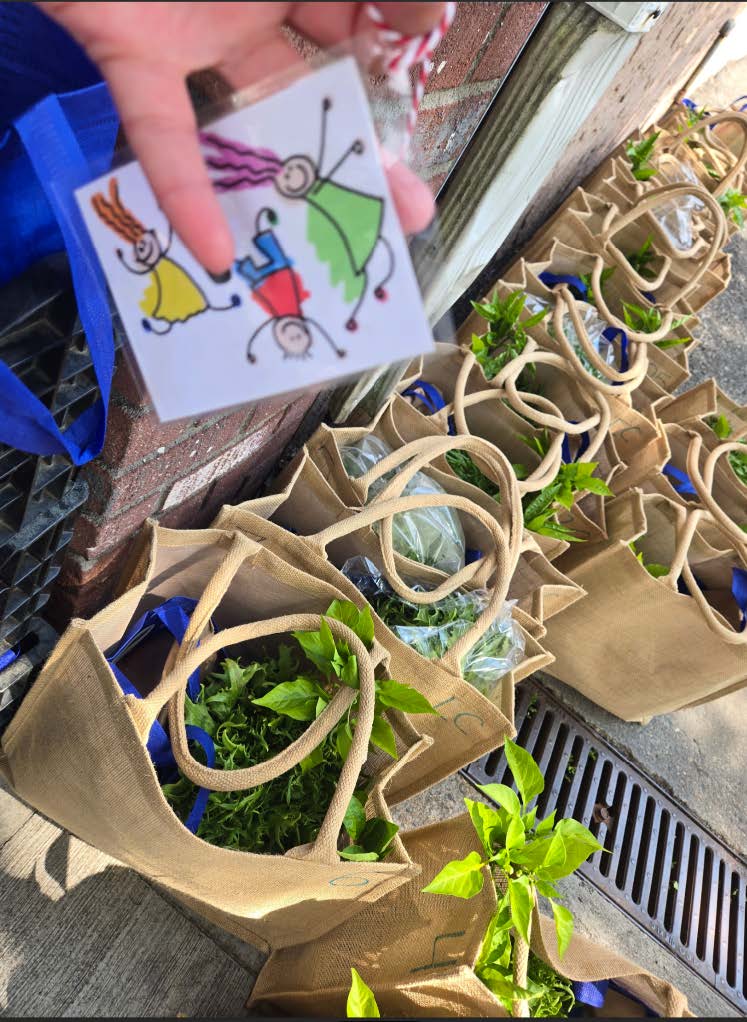
Figure 4. A collection of LEAF
at-home gardening kits.
Photo Credit: Carolina Saavedra
The Leading an Ecological and Accessible Food System Program (LEAF) of Stone Barns is a community-based program serving households in the South Bronx and Sleepy Hollow. It integrates produce distribution, home food growing, climate-smart gardening, and nutrition education, with built-in evaluations to track outcomes and impact (Figure 4). The LEAF research and evaluation work is led by the Nutrition, Health & Community Engagement research team in collaboration with Stone Barns community partners.
In 2025, 140 families (more than 350 individuals) enrolled in LEAF with a 99% retention rate from 2024. The team collects quantitative and qualitative data through surveys. Survey findings were synthesized and recently published in a peer-reviewed paper summarizing the initial impacts of the Program (Figure 5). The paper’s findings suggest that integrating regeneratively grown produce, home gardening support, and culturally responsive nutrition education – delivered through trusted community organizations – was associated with improvements in household dietary patterns, gardening confidence, and awareness of support services, such as SNAP and WIC.
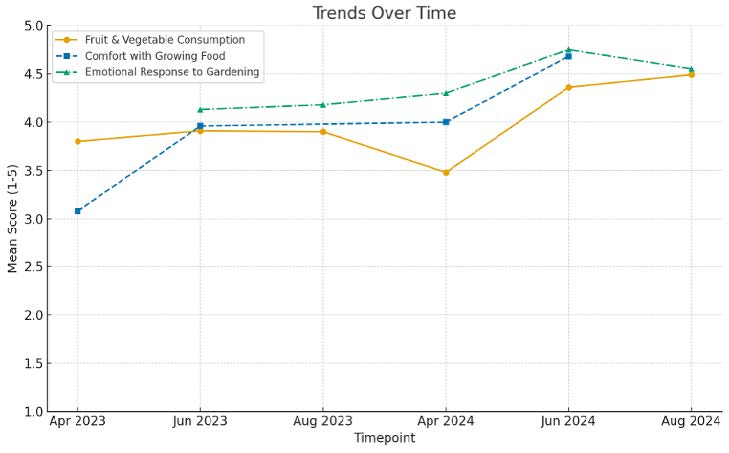
Figure 5. Survey results showing the general increase in LEAF participant’s fruit and vegetable consumption, comfort with growing food, and emotional response to gardening. Fruit and vegetable consumption: 1 = rarely/never, 5 = every day; Comfort with growing food: 1 = not at all comfortable, 5 = very comfortable; Emotional response to gardening: 1 = very bad, 5 = very good.
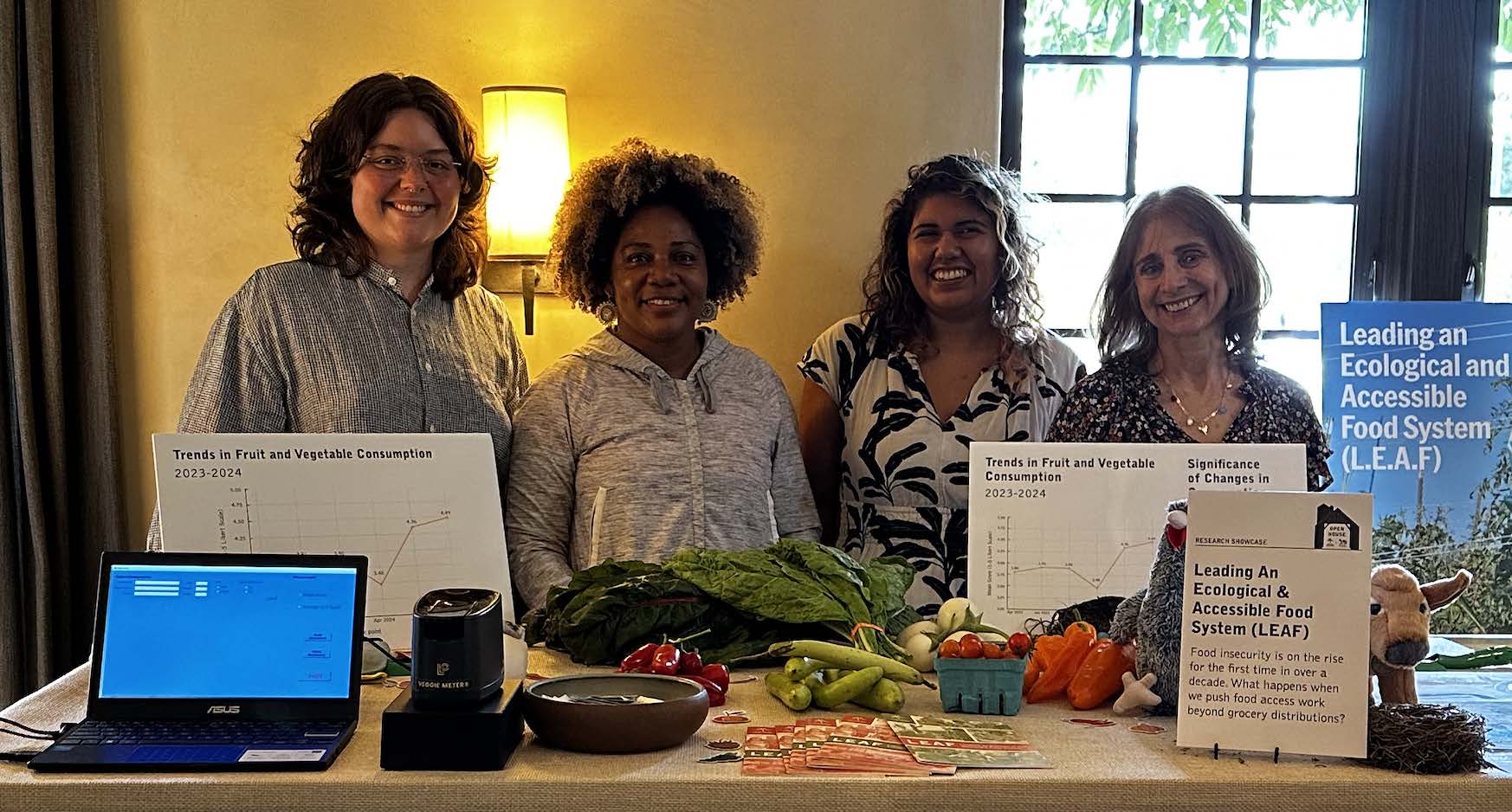
Figure 6.The Nutrition, Health & Community Engagement team
(Left to right: Nina Feldman, Natalie Greaves-Peters, Carolina Saavedra,
Pamela Koch, pictured with the Veggie Meter® (bottom left).
Photo Credit: Stone Barns Center
The Nutrition, Health & Community Engagement team introduced the Veggie Meter® to LEAF participants in 2025, a validated non-invasive optical scanner that measures skin carotenoid levels as an objective proxy for fruit and vegetable intake, providing a quantitative understanding of participants’ fruit and vegetable intake over time (Figure 6). LEAF plans to extend its program to 160 families and aims to continue expanding into other communities in the future. Now armed with a structured system to distribute healthy food, collect observational and experimental data, track progress, and educate the community, plans for 2026 include development of a LEAF replication toolkit to support adaptation in additional communities.
Policy & Markets
The Policy & Markets Pillar identifies opportunities to leverage scientific insights and original research to inform future policy decisions. The team, composed of social scientists, farmers, and Westchester County planners, has defined a series of research projects that are relevant for transforming how agricultural land is valued in county planning decisions. They are now embarking on a project to estimate the multifunctional value of agroecological land management – including its environmental and social benefits – to properly communicate the value of agricultural land in counties that face high amounts of development pressure. The project aims to guide sustainable development decisions as tensions between food system needs, climate resilient land management, and economic pressures continue to increase. Stone Barns also has a ten-year-old Climate Action Plan (CAP) that guides how it utilizes land from the surrounding Rockefeller State Park Preserve land under a private-public management license. In 2026, the team will work towards revising the plan, emphasizing lessons learned over the past ten years, and developing a playbook for other public-private land sharing agreements that could benefit farmers, community members, landowners, and bioregional stewardship. By leveraging research from the Agroecosystems team, the updated CAP will reflect how far the data and technology has come, demonstrating how forward-thinking goal setting can catalyze the research and policy spaces.
An Integrated Approach
The real strength of the Stone Barns-Columbia Climate School partnership lies in how the three separate Pillars reinforce one another. Robust agroecosystem data help to identify pathways for capturing the ecological value of agroecosystem management approaches, which can be leveraged in policy discussions. Community-based nutrition programming links increased access to fresh produce with measurable health outcomes and show how local farms can scale their impact into public health. Policy research integrates lessons learned into county planning, conservation frameworks, and public-private partnerships that shape decision-making.
Going forward, 2026 promises a year of expansion. Integrated agroecosystem models, LEAF toolkits, and updated policy frameworks are positioning the partnership to extend beyond Stone Barns and Westchester County. Looking to the coming weeks, the Stone Barns-Columbia Climate School research partnership team will gather for a biannual workshop on May 8th, 2026, to begin bridging the gap between research and real-world transformation. Previous workshops took place in May and October of 2025 (Figure 7). As pressures on food systems continue to grow, the Stone Barns-Columbia Climate School research partnership offers a scalable model for how cross-disciplinary partnerships can turn research into actionable solutions.
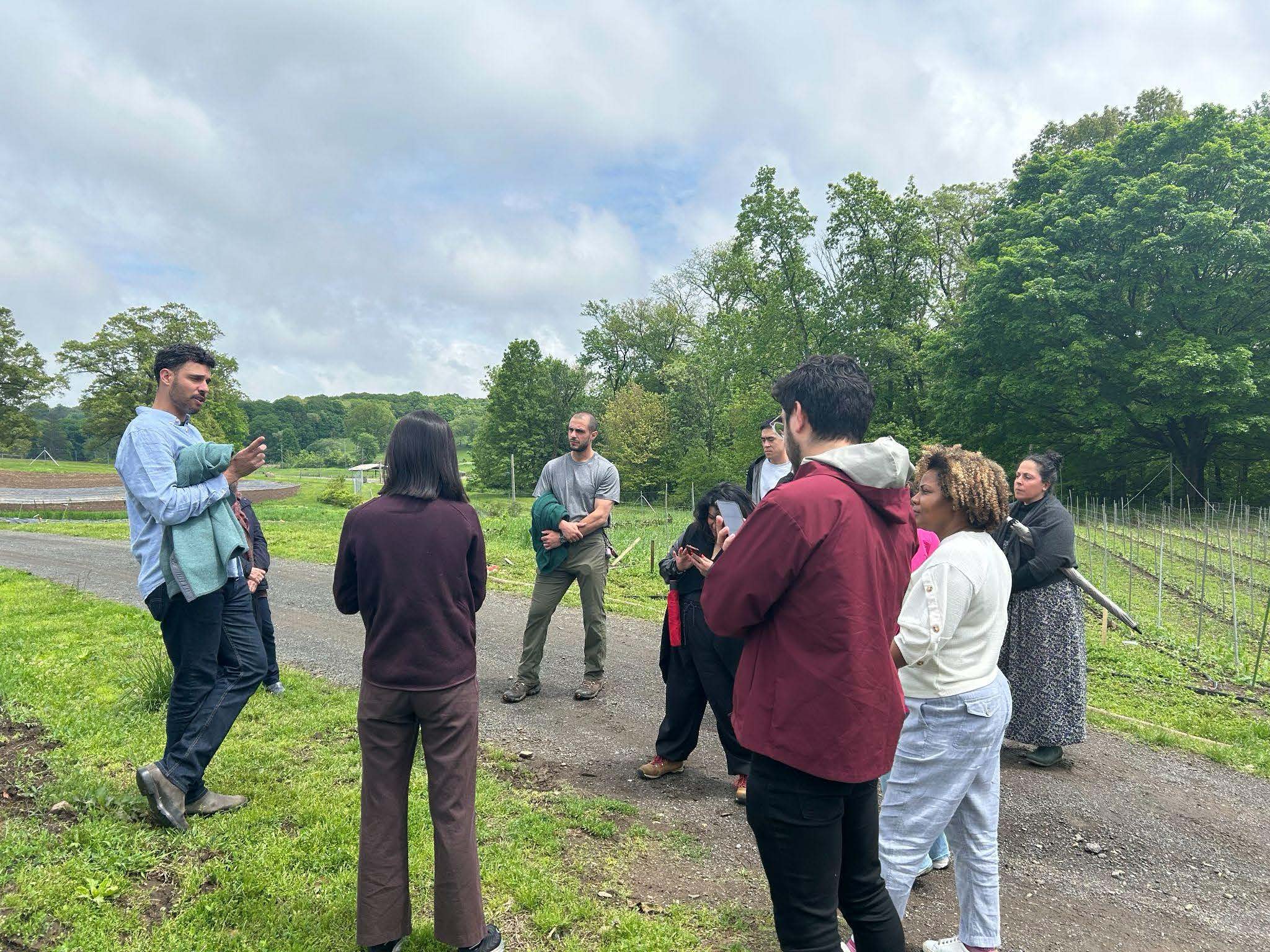
Figure 7. The partnership in action during the
Spring 2025 Workshop hosted at the Stone Barns Center.
Photo credit: Natalie Kozlowski
Additional Resources:
To learn more about the Stone Barns Center for Food & Agriculture: https://www.stonebarnscenter.org/
LEAF Project paper published in MDPI: https://www.mdpi.com/2071-1050/18/2/750